Rota de Sameiro
Difficulty
Distance
5.9 km
Duration
1h
Altitude
616–633 m
Type
Loop
Description
Machine-translated from Portuguese.
As we travel along the Sameiro Route, we are immersed in an atmosphere of history and tradition. Along the trail, we can see monuments of religious and folk significance, which allow us to fully immerse ourselves in a truly unique experience. In terms of urban heritage, there are buildings of authentic design, notably the Church of São João Baptista and, further along the route, the Chapel of São Lourenço, with all its associated mysticism.
In fact, walking this route means immersing yourself in the essence of the mountain people and their history. The life of the village is etched into every monument along the way, every schist or granite house, every “levada” carrying fresh water, every plowed field, and every face that greets us.
The Sameiro Parish Council building houses the headquarters of the Malmequeres de Sameiro Folk Dance Group, which promotes the preservation of mountain culture by collecting accounts of experiences and customs from days gone by and showcasing traditional costumes and songs.
Another notable feature in the town’s history is the Community Oven . Although these structures have lost their social, cultural, and economic importance in the face of industrialization and mass production, they represent an important part of the community’s history and way of life .
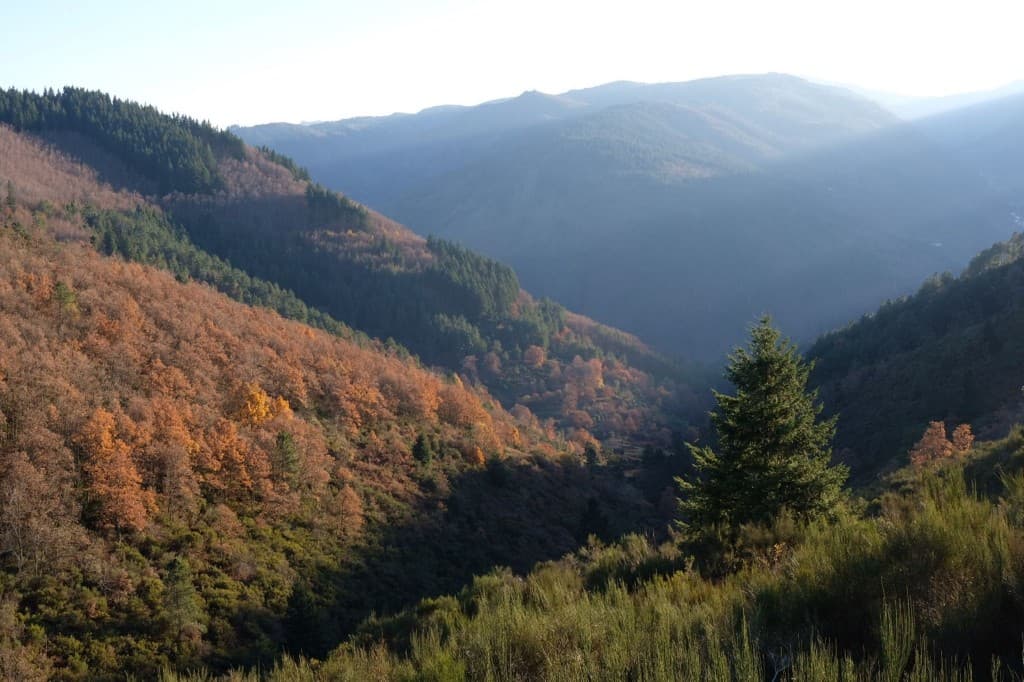
Along the Sameiro Route, the panoramic view
over the farmlands, waterways that cross the village, pastures, and the surrounding forest stands out.
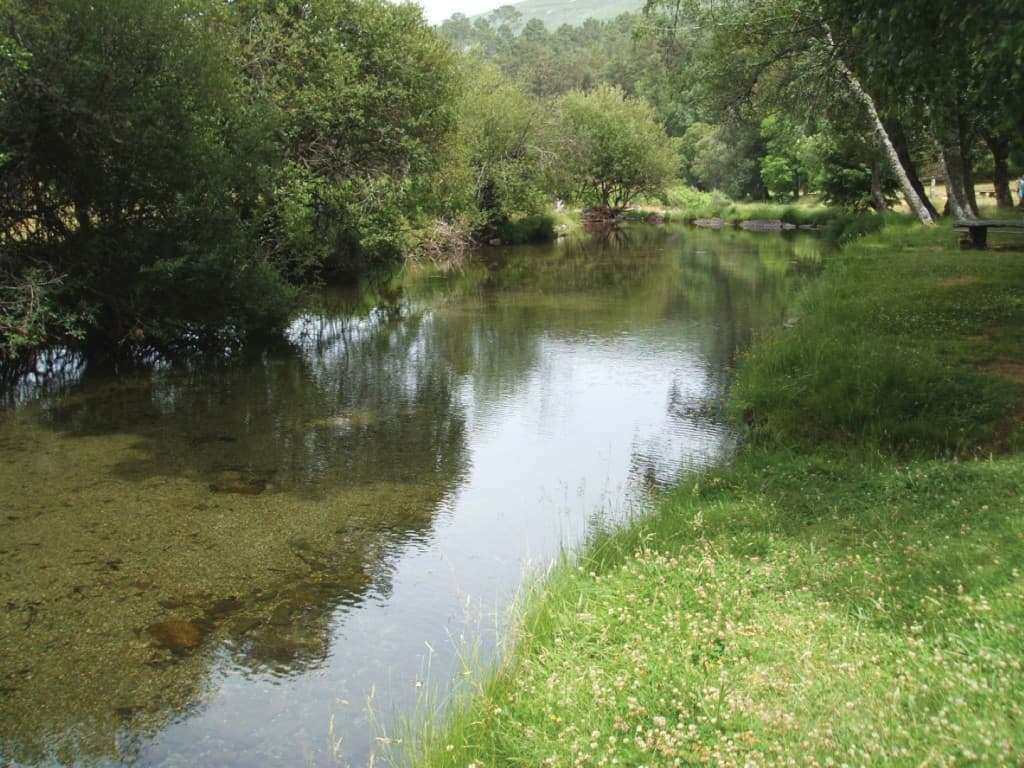
At the fork connecting Sameiro to São Lourenço, we are met with a natural landscape leading to the Ribeiro do Vale do Urso, of enchanting beauty and magnificence. At this location, according to a report in the former Manteigas newspaper “Estrela da Beira,” No. 138, dated December 21, 1935: “At the a site called Ribeiro do Urso, in the neighboring parish of Sameiro, four Roman millstones and a milestone were recently found, and because their archaeological value was unknown, they were destroyed by the landowner. (…) All of this attests to the antiquity of the neighboring settlement.”
As for the flora, this route features species such as gorse, heather, rockrose, pioneer broom, lavender, ash, alder, maritime pine, Oregon pine, and holm oak, among other species that give the Sameiro Route a stunning palette of colors.
The Sameiro Route is largely covered by a mosaic of scrubland, open meadows, waterways, forested areas, and farmland, providing ideal habitats for various species, including the common lizard, black kite, common toad, common buzzard, raven, cuckoo, the hedgehog, the kestrel, the Sardão buzzard, the Iberian wall lizard, the bush lizard, the Iberian frog, the hoopoe, the short-eared owl, the barn owl, and the wild rabbit, among others. Of particular note is the lesser horseshoe bat, which faces a high risk of extinction.