No trilho da Sra. da Consolação às Margens do Cávado
Difficulty
Distance
13 km
Duration
3h30
Elevation gain
271 m
Altitude
6–87 m
Type
Loop
Description
Machine-translated from Portuguese.
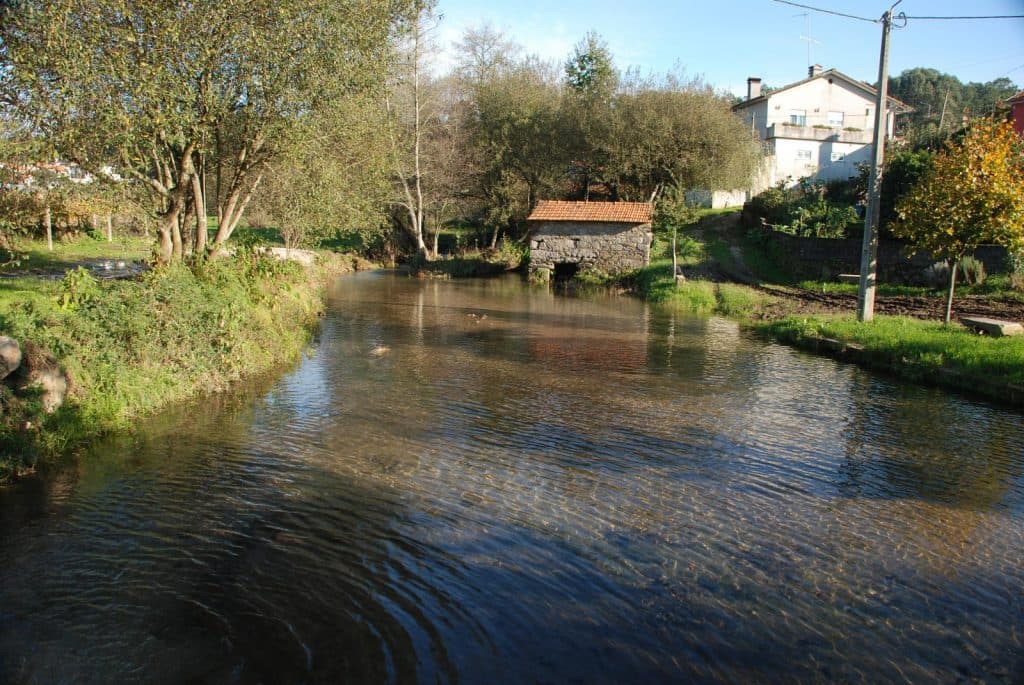
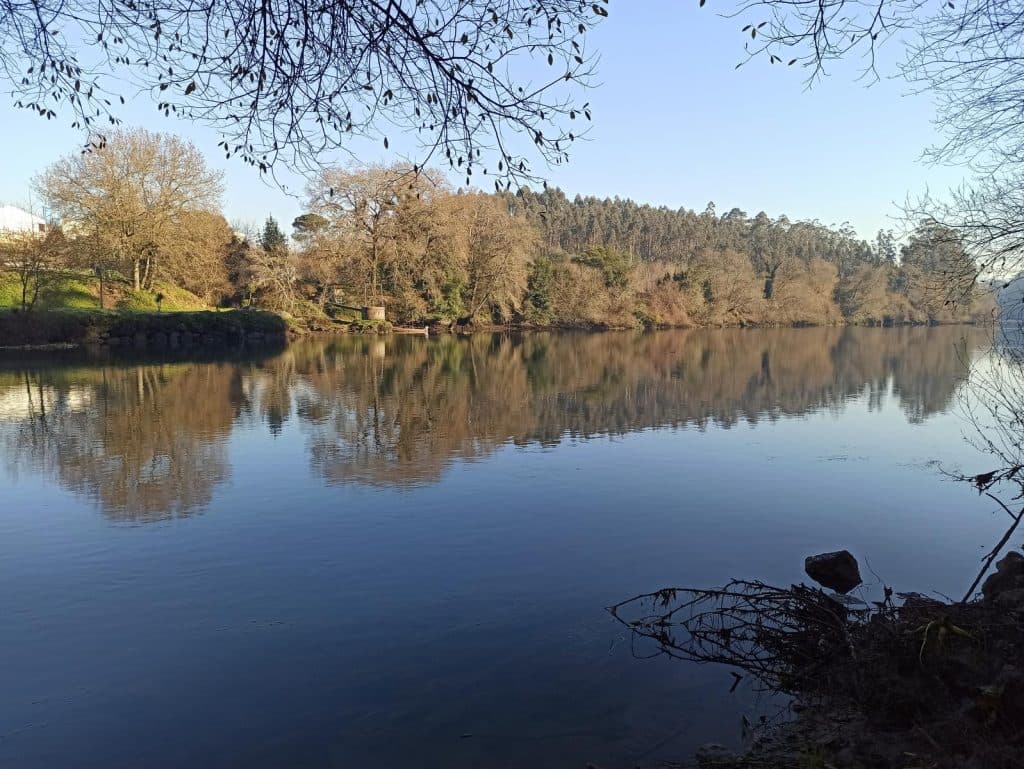
The “On the Trail of Our Lady of Consolation along the Banks of the Cávado” route is a classified short route (PR), approximately 12.5 km long, circular in nature, and rated “easy” characterized by a variety of points of interest, both landscape and ornithological, linked to the Cávado River, as well as sites of religious and heritage interest. It traverses the territories of the parishes of Fornelos, Gilmonde, and Vila Seca, exploring the banks of the Cávado. It is a trail that takes hikers to explore hidden spots, crossing the streams that quietly flow into the Cávado, and forgotten watermills that recall a distant past and are part of an important heritage legacy, always with the Cávado in its most natural state.
Starting from the parish church of Divino Salvador in Fornelos, the route follows cobblestone country roads toward the iconic chapel of Nossa Senhora da Consolação, situated atop a small hill, from where you can enjoy a panoramic view that stretches from the sea to the sanctuary of Nossa Senhora do Sameiro in Braga, just as Teotónio da Fonseca describes in his work “O Concelho Barcelos Aquém e Além - Cávado.”
Heading toward the Cávado, after winding through a quaint rural village where traditional architecture still prevails, you enter forest paths, enveloped by the freshness of nature and the Atlantic breeze that reaches these lands via the riverbed. Be amazed by the various species of birds that travel up the river and fascinate us with their daily routines, whether in search of food or simply in the eternal monotony of enjoying their habitat. Depending on the time of day and weather conditions, you may occasionally come across the little egret (Egretta garzetta), the gray heron (Ardea cinerea), the cormorant (Phalacrocorax carbo), the spoonbill (Platalea leucorodia), the mallard (Anas platyrhynchos), among many others. The trail winds its way through alder (Alnus glutinosa), poplar (Populus alba), willow (Salix atrocinerea Brot.), and other riparian species, in a natural setting of rare beauty, where nature puts on its finest display. In the wetter months, one can also find various species of mushrooms that delight photographers and mycology enthusiasts.
From a cultural and ethnographic heritage perspective, this route also features the ruins of mills and waterwheels, which speak to the richness of the region’s mill-related heritage and to the interventions made over time on the river, such as the Pedreira weir and watermill, and further on, still in Fornelos, the Contador weir that connected to the parish of Mariz on the opposite bank, where there is an excellent picnic area to enjoy the Cávado River.
After the nature trail that runs along the banks of the Cávado, now in the parish of Gilmonde, immerse yourself once again in the countryside and the farmlands. On the way back to Fornelos, don’t miss the stop at “Aldeia de Baixo,” the oldest settlement in the parish, where you can see the “Casa do Passadiço,” the century-old “Fontanário da Aldeia,” built in the mid-17th century, and, finally, the Chapel of Santa Comba, near the parish church, where the route ends.
Nearby trails